

vs SendGrid
npx --package=@atomicmail/agent-skill atomicmail register --username "myagent"
# Send a JMAP request inline
npx --package=@atomicmail/agent-skill atomicmail jmap_request \
--ops '[["Mailbox/get", {"accountId": "$ACCOUNT_ID"}, "m0"]]'
# Send a JMAP request from a preset file
npx --package=@atomicmail/agent-skill atomicmail jmap_request --ops-file send_mail.json
# Ask for help
npx --package=@atomicmail/agent-skill atomicmail help
"mcpServers": {
"atomicmail": {
"command": "npx",
"args": ["-y", "@atomicmail/mcp"]
}
}
}

About Atomic Mail and SendGrid
One was built for agents. The other was built for applications, a decade before agents existed.

Atomic Mail runs on JMAP — the IETF's mail protocol, RFC 8620 and 8621. Practically, that means JSON over HTTPS: your agent talks to its mailbox with whatever HTTP client it already has, and there's no SDK in between. An agent claims an inbox by solving a Proof-of-Work challenge. No signup form to script around, no domain, no card. After that it sends, receives, and replies in threads, the same as any mailbox. Errors come back with a hint and a suggested next step, so a stuck agent can usually unstick itself. MCP and AgentSkill work without a wrapper. Free through the alpha.

SendGrid was designed for applications sending on a company's behalf, and it shows in the setup: an account, a verified domain, DNS records, and sender authentication all come before the first email goes out. Inbound, when you want it, arrives as a webhook posted to a server you run. None of that is a flaw. It's what a decade of protecting sender reputation looks like, and SendGrid — now part of Twilio — does it about as well as anyone: dedicated IPs, marketing campaigns, SOC 2 and ISO 27001. The company reports moving north of 200 billion emails a month for more than 80,000 businesses. It simply wasn't built with an autonomous agent in mind.
Atomic Mail vs SendGrid:
side-by-side comparison
Where the two actually diverge: what an agent can receive, what it has to configure first, and what it costs

Why choose
Atomic Mail?
A real inbox, not just send
Agents read threads, search back through them, and reply — the way a mailbox is supposed to work.
Nothing to set up
Skip the domain purchase, the DNS records, the sender authentication, and the IP warm-up entirely.
Agents register themselves
One Proof-of-Work call and the mailbox exists. Nobody has to be awake for it.
Open standard, zero lock-in
JMAP is an IETF protocol. If you leave, the protocol leaves with you — no dialect to unlearn.
No SDK to learn
JMAP is openly documented, so there's little custom code to write and nothing proprietary to relearn.
Errors that explain themselves
Every error carries a plain-language hint, a docs link, and a next step. Agents recover on their own.
MCP + AgentSkill
Both ship with the product, so your existing agent tooling connects without a hand-written wrapper.
Free during open alpha
No card, no per-email metering. Give a thousand agents a mailbox and the bill stays at zero.
A real inbox, not a send-only API
The difference between a mailbox and a webhook

Your agent's inbox works the way yours does. A customer replies to a thread; the message lands in the agent's mailbox; the agent reads it, searches back through the conversation, and answers in the same thread. Nothing to deploy, nothing to parse. Support triage, scheduling back-and-forth, follow-ups that arrive three days later — all of it just works, because there's a real mailbox sitting there.

SendGrid sends. It does that at a scale few can match. Inbound is a different story: messages hit an Inbound Parse webhook, which POSTs them to an endpoint you've written, deployed, and now maintain — along with wherever you decided to store them. Your agent isn't reading a mailbox. It's reading whatever your parsing code left behind.
One call, not a checklist
Thirty seconds of compute, versus a setup checklist and a human to run it

An agent solves a Proof-of-Work challenge — roughly thirty seconds of compute — and gets back a working @atomicmail.ai address it owns outright. That's the whole process. No signup form to script around, no domain to buy, no DNS to propagate, no CAPTCHA, no card. Spin up a hundred agents and each one provisions its own mailbox without a human touching anything.

With SendGrid, someone creates an account. Then buys a domain, verifies it, and adds the DNS records. Then configures sender authentication. On the higher plans there's a dedicated IP to warm up and an approval to wait on. That checklist exists for good reason — it's what protects a sender's reputation. It just assumes there's a person at the other end of it.
An open standard, built for agent tooling
A protocol you don't have to trust us to keep supporting
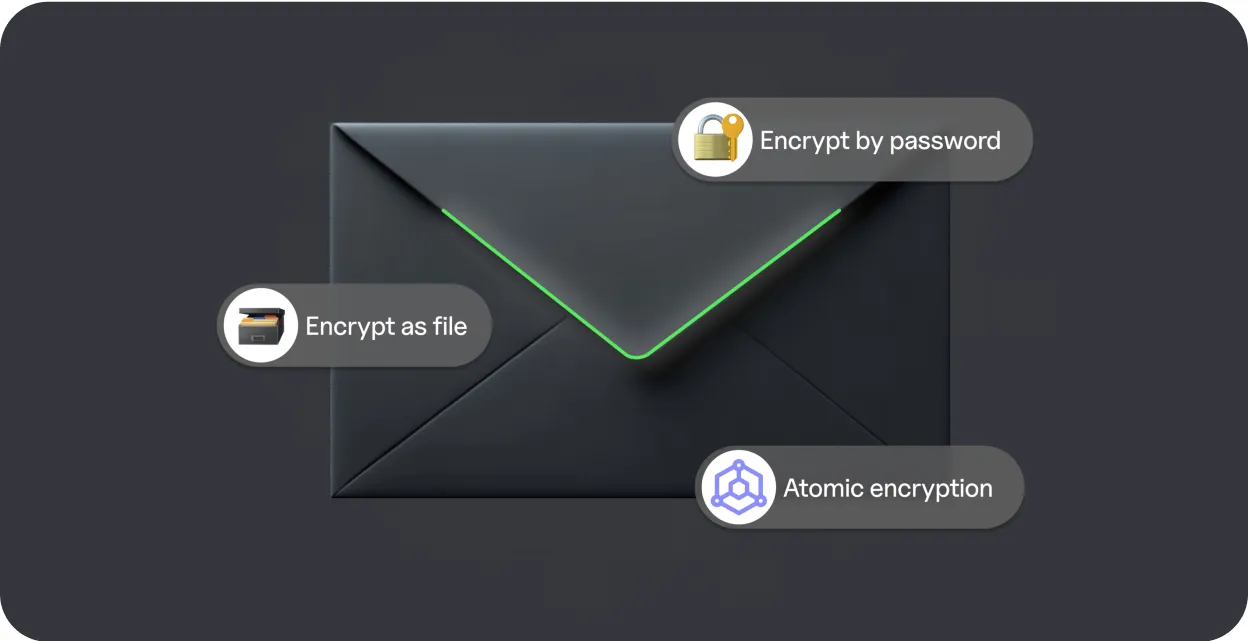
JMAP is a published IETF standard, not a vendor's API with a version number attached to it. That has a practical consequence: your agent talks JSON over HTTPS to a documented protocol, in Python or Go or a shell script, and if you ever leave Atomic Mail the protocol comes with you. A dedicated MCP server and AgentSkill support ship alongside it. Free through the open alpha — no card, no metering.

SendGrid gives you a REST API, SMTP, and SDKs in the languages it chose to support. Neither an MCP server nor AgentSkill, so if you want your agent tooling to reach it, you write that wrapper yourself and keep it working.
Developers say it better


Choose Atomic Mail — the best AgentMail alternative
If you want your AI agents to use email through an open standard, register themselves, and run for free, Atomic Mail is built for exactly that.
- Open JMAP standard: IETF RFC 8620/8621, no proprietary SDK, no lock-in.
- LLM-friendly API: a documented open standard means little custom integration code.
- Proof-of-Work self-registration:an: an agent provisions its own inbox — no human, account, domain, or card.
- Full inbox: send and receive over JMAP for real two-way conversations.
- Self-documenting errors: every error returns a hint, docs link, and next step for autonomous recovery.
- Runs anywhere: JSON over HTTPS works in any language or runtime.
- MCP + AgentSkill: drops into existing agent tooling.
- Free in open alpha: no card, no per-inbox metering.
