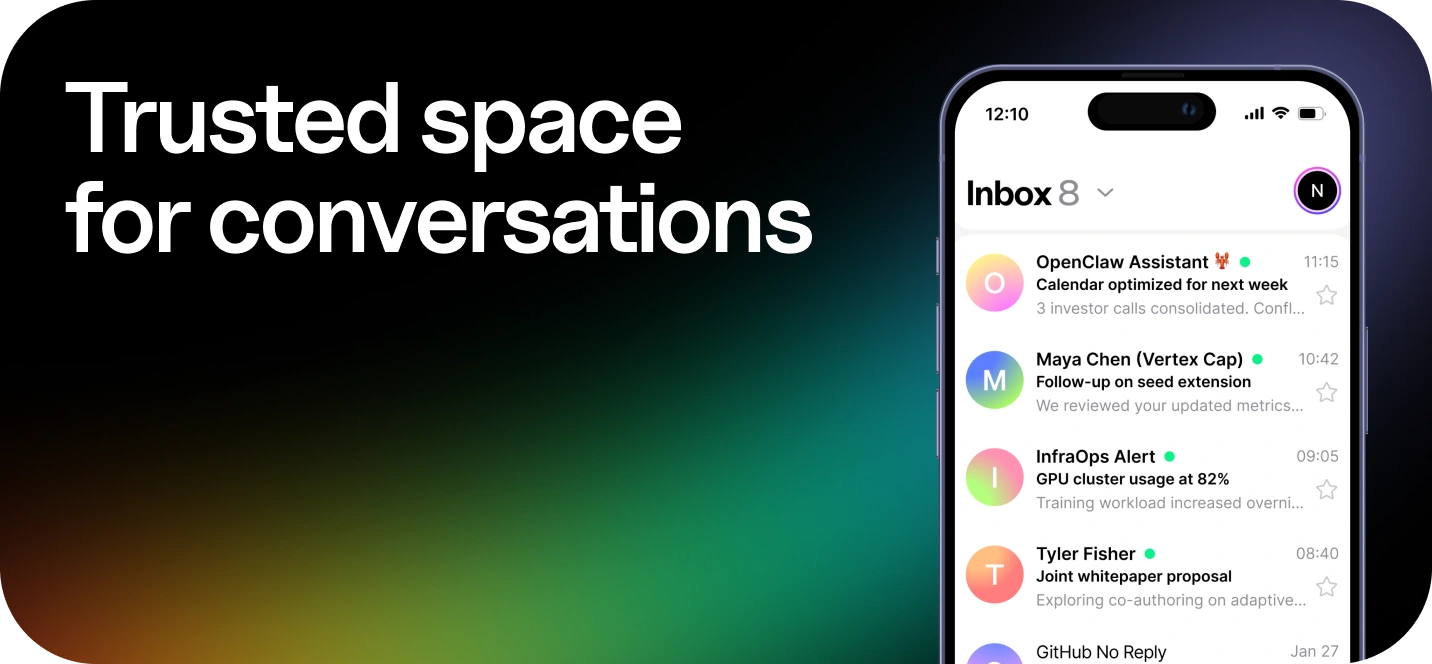


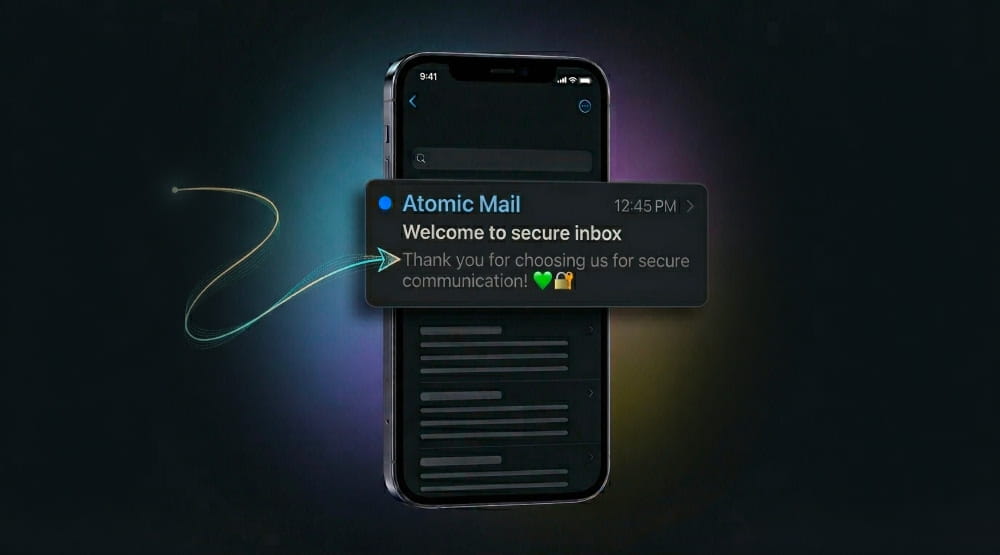
TL;DR
- An email preheader call to action helps turn inbox views into opens and action. A strong one adds context, highlights value, and supports the subject line instead of repeating it.
- Do: keep it short, specific, aligned with the subject line, and focused on one clear benefit or action.
- Don’t: waste the space with generic filler, duplicate the subject line, hide the main point too late, or sound spammy.
The best effective email preheader call to action examples feel clear, relevant, and easy to act on. For examples by type, scroll down 👇
What Is An Email Preheader And CTAs
The email preheader is the short preview text that appears next to or under the subject line in most inboxes.
On mobile, it often sits right below the subject:
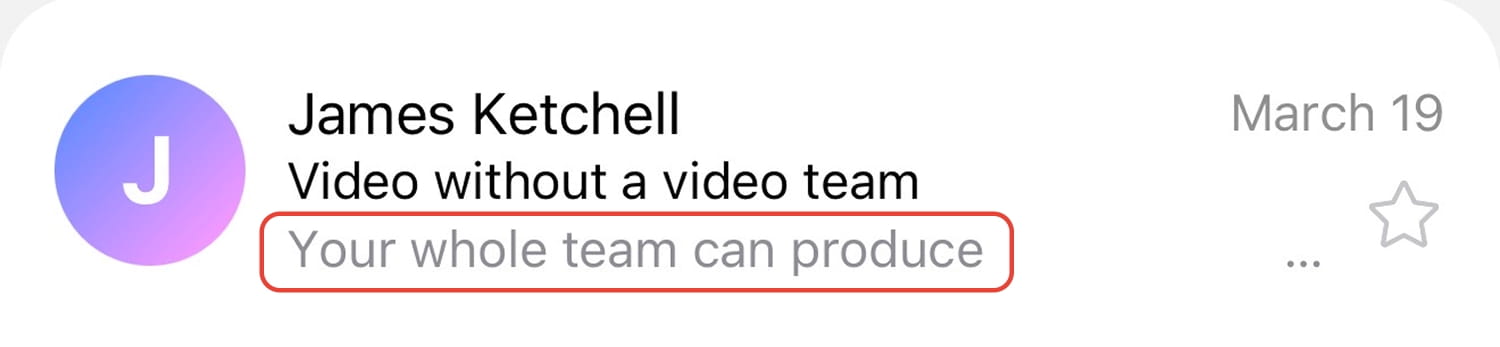
On desktop, it may appear beside it.

Either way, readers see it before they decide whether to open.
A CTA, or call to action, is the part that tells the reader what to do next.
Like: open the email; claim the offer; activate the account; book the demo; start the trial. When you combine the preview text with a clear action, you get an email preheader call to action.
The difference:
- Subject line: creates interest
- Preheader: adds meaning
- CTA: pushes movement
The Impact Of An Email Preheader CTAs
The primary function of any commercial email is to move the reader from the inbox into action. That action might be a landing page, checkout flow, account panel, product tour, or secure dashboard. The email preheader call to action helps make that jump easier and reduces friction at the very first decision point.
When used effectively, it pre-qualifies reader intent, resulting in measurable improvements in key performance indicators (KPIs).
Performance benchmarks
Data from over 4.4 billion emails shows the causal relationship between optimized preheader CTAs and engagement.
Who Needs Email Preheader CTAs Most
Literally anyone who sends emails can benefit from using an effective email preheader call to action. But some need them more than others.
The biggest winners are:
- ecommerce brands pushing offers, launches, and cart recovery
- SaaS companies sending trials, upgrades, product updates, and demos
- startups and founders trying to make every campaign work harder
- media brands and newsletters
If you want your recipient to take any action, you desperately need an effective email preheader call to action.
Psychology Behind Effective Email Preheader Call To Action
The most effective email preheader call-to-action examples work because they align with how people actually make decisions.
High-converting preheaders use specific psychological triggers to capture attention:
- Scarcity and urgency – the reader feels there is a limited window to act
- Loss aversion – people are often more motivated to avoid losing something than to gain something new
- Curiosity – a well-built gap between what is known and what is possible pulls the reader forward
- Direct benefit – the value is obvious immediately
An effective email preheader call to action does not overwhelm the reader. It gives them a fast, emotionally clear reason to open. Knowing how these triggers work and using them with precision typically enhances open rates, click-through rates, and the overall conversion power of the email.
Structural Anatomy And Synergistic Alignment
Never duplicate the subject line in the preheader. Advanced marketers use brief subject lines (3-5 words) as the "setup," relying on the preheader as the "punchline" to carry context and instruction.
Example:
Spatial constraints and front-loading
Email clients have strict character limits. Since the lion's share of email communications is now on mobile devices, ensure that critical action verbs and value propositions are included within the first 35 characters to avoid being cut off.
Effective Email Preheader Call To Action Examples
Below are effective email preheader call to action examples grouped by type. Each group has a different job. That matters because a welcome email, sales push, abandoned cart reminder, B2B outreach message, and security alert do not persuade in the same way.
Short CTA examples
Objective: Create instant clarity with minimal words.
These email preheader call to action examples work best when the subject line already carries most of the context and the preheader just needs to push the next step.
Linguistic framework: Command verb + immediate action / Command verb + short value cue / Direct action + low friction
- Open now to see what’s inside
- Claim your offer before it ends
- Start in less than 2 minutes
- See the update now
- Unlock your access today
- Finish setup in one click
- Get the full details inside
- Activate your account now
Benefit-led CTA examples
Objective: Show the reader exactly what they gain.
Linguistic framework: Command verb + direct benefit / Action + time saved / Action + protection gained / Action + clearer outcome
- Save 50% on your next order today
- Grab 20% off
- Cut your workflow time in half
- Get glowing skin before summer
- Learn how to double your web traffic
- Sleep better with our new mattress line
- Boost your ROI without extra ad spend
- Earn double reward points this week
- See the faster way to recover your account securely
Urgency-driven CTA examples
Objective: Scarcity and FOMO. Force urgent prioritisation by exploiting the raw psychology of loss aversion. This type of email preheader call to action works only when the urgency is real.
Linguistic framework: Deadline + command / Loss warning + action / Financial value + urgency / Expiration cue + immediate next step
- Only 3 left - should we save you one?
- Shop before it's gone
- Hurry, your coupon code expires tonight
- Last chance to keep your trial benefits active
- Final hours to shop the clearance event
- Prices change tomorrow – lock yours in now
- Upgrade now to keep your current plan price
- Your early access window closes in hours
- Flash sale: activate your discount before midnight
Friendly and conversational CTA examples
Objective: Reduce resistance by sounding human, warm, and low-pressure. These email preheader call to action examples are especially useful in onboarding and re-engagement.
Linguistic framework: Direct question + soft action / Conversational cue + low-friction next step / Human tone + implied benefit
- Curious what changed? Take a quick look
- Hey there, ready for a surprise?
- Looking for the perfect gift? Peek inside
- We saved your spot – come back and finish
- Here’s the easiest way to get started
- Need a faster setup? This will help
- Take a peek at what we built for you
- Want better email privacy? Start here
- See why users keep switching to this setup
E-commerce and retail operations
Objective: Drive fast transactional action. In ecommerce, the inbox behaves like a storefront. The best effective email preheader call to action examples in this category push speed, savings, exclusivity, and fear of missing out.
Linguistic framework: Command verbs + financial value + urgency / Inventory limits + direct question or command / Exclusivity + forward motion / Intent reminder + incentive
- Grab 20% off before midnight
- Activate your coupon code today
- Start saving before the sale ends
- Your cart is waiting (and so’s this discount!)
- Only 3 left – should we save you one?
- Sale ends tonight – no extensions
- Be the first to own it
- Get early access now
- Explore what’s new
- Complete your purchase now
B2B, SaaS, and enterprise solutions
Objective: Appeal to logic, efficiency, problem-solving, and low-risk exploration. In B2B, aggressive hype usually hurts trust. A stronger email preheader call to action makes the next step feel practical and easy.
Linguistic framework: Low-friction exploration + zero-risk assurance / Empathy + problem identification / Quantified result + peer validation / Authority + educational value
- Watch demo and see it in action
- Start your free trial today
- Try it free for 14 days
- See how we helped a team boost ROI by 30%
- See how top agencies scale their operations
- Read the case study on driving organic growth
Media, publishing, and newsletter operations
Objective: Turn inbox attention into reading time. For newsletters and publishers, the product is the content itself, so the email preheader call to action must promise intellectual reward, novelty, or a strong point of view.
Linguistic framework: Story continuation + deep-dive prompt / Expectation violation + insider knowledge / Humor + pattern interruption
Examples to use in this category:
- The story you missed this week
- Read the full article
- See the full story
- This email may contain controversial opinions
- I learned this the hard way...
Lifecycle, onboarding, and re-engagement
Objective: Reduce friction, restart motion, or restore user agency. These effective email preheader call to action examples are useful when the goal is not immediate revenue, but setup completion, list health, or renewed engagement.
Linguistic framework: Process simplification + guided assistance / Low-pressure invitation + agency restoration / Time boundary assurance + value of opinion
- Complete your profile
- Get started
- Take the tour
- Customize your dashboard
- Walk me through it
- We miss you… Come back
- Update your preferences
- Click to stay subscribed
- Not ready yet? Snooze us.
- Answer a few quick questions
- Help us improve
- We’re listening – click here
Creative CTA examples
Objective: Break reader expectations and interrupt routine inbox scanning. These effective email preheader call to action examples work best when the brand voice allows surprise, wit, tension, or a slightly provocative angle.
Linguistic framework: Pattern interruption + curiosity / Reverse psychology + command / Confession + reward / Social proof + open loop
- We made a mistake (and you get the reward)
- Don’t buy our product until you read this
- What is everyone talking about? Find out inside
- We almost kept this to ourselves
- Open this before your smarter competitor does
- This email breaks our usual rules
- Ignore this if you like missing good opportunities
- This might be the most useful email we send all month
- We have good news and slightly dangerous news
How to use these examples without sounding generic
Do not copy-paste blindly. Adapt each email preheader call to action to the real context, the real offer, and the real reader.
The best effective email preheader call to action examples feel specific because they are specific. A sale needs a different push than a product demo. A newsletter needs a different tone than a security notice and so on.
A simple test helps: read the subject line and preheader together out loud. If they sound like one connected thought, the alignment is perfect. If they sound repetitive, vague, or disconnected, rewrite until the transition feels clean.
Preheader CTA Mistakes To Avoid
Now let’s look at what not to do.
- Repeating the subject line: If the preheader says the same thing as the subject, you waste preview space.
- Being vague: Lines like Learn more or Don’t miss out are too empty to drive action. The best effective email preheader CTA examples are specific about what the reader gets or needs to do.
- Sounding spammy: Too many caps, fake urgency, or exaggerated promises make the message feel untrustworthy. That is especially dangerous in security, SaaS, and B2B emails.
- Hiding the value too late: If the key benefit appears at the end, many readers will never see it. Put the most important words early.
- Ignoring mobile length limits: A long email preheader CTA can break apart or get cut before the real point appears. Write for tight inbox previews first.
- Misaligning the message: If the subject line, preheader, email body, and landing page push different ideas, friction rises fast. Strong effective email preheader call to action examples feel like part of one continuous path.
- Using passive voice: "New arrivals are available now" is an observation, not a directive. You need a verb. If you want the click, demand it.
FAQ: Email Preheader Call To Action
What is an email preheader call to action?
An email preheader call to action is preview text that appears next to or below the subject line and pushes the reader toward a next step. It adds context, value, or urgency before the email is even opened.
Why does an email preheader call to action matter?
It matters because the inbox decision happens fast. An effective email preheader call to action can make the message feel more relevant and increase the chance of an open or click.
How long should an email preheader call to action be?
Most effective lines work best in roughly 35-90 characters, with the key action or benefit placed early. The exact visible length depends on device and inbox.
Should the preheader repeat the subject line?
Never. Repeating the subject usually wastes valuable space. The strongest effective email preheader call to action examples complement the subject instead of copying it.
What makes an effective email preheader call to action?
Clarity, specificity, and alignment. The reader should quickly understand what the email is about, why it matters, and what to do next.
Do preheader CTAs improve conversion rates?
They can. A stronger email preheader call to action improves the quality of the inbox preview, which can support better opens, clicks, and downstream conversions.
What is the difference between preheader text and preview text?
In practice, people often use the terms interchangeably. Both refer to the short text shown in the inbox after the subject line, though some marketers use preheader for the text they intentionally write and preview text for how it appears in the inbox.
Can a preheader CTA be too aggressive?
Yes. If it sounds fake, pushy, or manipulative, trust drops. The best effective email preheader call to action examples create momentum without sounding desperate.
How do I write a better email preheader call to action?
Start with the action or benefit, make it specific, and keep it aligned with the subject line. Then check whether the first few words still work when the line gets cut on mobile.