

TL;DR
What happened: The UK government is rolling out a new digital ID UK infrastructure (anchored by GOV.UK One Login) to replace physical IDs with digital credentials.
The good: Speed and convenience. No more scanning passports for every new job; instant age verification for buying wine; frictionless banking; less boring admin for both people and businesses.
The risks: It creates a centralized "honeypot" containing the personal data of over 69 million people, including their health, tax and employment records. If your account is compromised, your entire digital life is at huge risk.
Dark path: Some experts fear that once new digital ID checks are embedded everywhere in the UK, they could easily evolve into tools for tracking movement, social scoring or freezing assets, making digital ID mandatory for basic participation in society.
The defence: You can’t stop the government from building it, but you can secure your access to it. Your whole GOV.UK One Login identity is tied to your email, so using a separate, secure, end-to-end encrypted inbox like Atomic Mail as your dedicated login and recovery address makes it far harder for attackers to hijack your digital ID.
What Is UK Digital ID – and What Does It Do?
UK digital ID is a verified digital profile that proves you are you. Instead of paper documents, you have a set of digital credentials.
Currently, if you want to rent a flat, you show a physical passport. The landlord looks at it, maybe photocopies it (insecurely), and says "okay." With Digital ID, you don't show the document. You share a cryptographic proof that says "Yes, this person is who they say they are."
How UK digital ID works
The system relies on a "hub and spoke" model, but the government is building a big central hub:
- GOV.UK One Login: It replaces the 190+ different ways people currently log in to government services (like Gateway, Verify, etc.). Once you verify your identity here (using a scan of your passport and a selfie), this single login grants access to HMRC, the NHS, and more.
- Biometrics: It uses facial matching technology to bind your physical face to your digital file.
- The digital wallet: The government is also testing a GOV.UK Wallet (similar to Apple Wallet) where these "credentials" sit.
Where you’ll use it first
UK digital ID mandatory checks are practically already here for some sectors. The government is rolling this out where they have the most leverage:
- Jobs (right to work): Digital ID will become the exclusive method for Right to Work checks by 2029. Employers will verify digital credentials rather than physical documents. The goal is to make it impossible to work in the UK without a digital footprint.
- Renting (right to rent): Landlords will digitally ping the Home Office database to confirm your eligibility instantly.
- Age verification: Buying alcohol or accessing age-gated websites (a requirement likely to tighten with the Online Safety Act).
- Banking and fintech: KYC (Know Your Customer) checks plug into certified UK digital ID providers for quicker onboarding.
Why is the UK introducing digital ID now?
Official reasons
The old system is outdated. Physical cards can easily be faked, lost, and reveal too much information (why does a bouncer need your home address just to check your age?). The world is moving towards digital wallets (e.g. the EU Digital Identity Wallet), and the UK could be left behind with outdated paper systems.
So, the pitch for the digital ID UK is simple:
- Stop illegal working via standardised digital checks
- Reduce fraud and identity theft by making spoofing almost impossible
- Modernise government with a single login instead of dozens of separate accounts
The less-obvious drivers
Behind the scenes, UK digital ID also serves other goals:
- Data linking: One widely used UK digital ID makes it easier to connect records across tax, welfare and border systems. It allows the government to see a 360-degree view of your life.
- Cost savings: Automation and digital checks reduce admin headcount and paper handling.
- International pressure: As other regions roll out wallets and digital IDs (like EU Digital Identity Wallet), the UK wants to stay compatible and relevant.
If It Works as Promised: Pros & Cons
Pros
1. Convenience and speed: You prove your identity once, then reuse the same UK digital ID everywhere.
- For everyday people, that means faster sign‑ups, fewer passwords and duplicate forms, and a single, consistent way to prove who you are.
- For businesses, a well‑implemented digital ID UK stack means automated right‑to‑work and right‑to‑rent checks, cleaner audit trails, and less time spent chasing missing documents.
2. Privacy (ironic): You stop sharing your home address with every bouncer and cashier.
3. Better fraud prevention: UK digital ID cards are harder to fake than a JPEG of a driving licence. Cryptographic signatures, device‑bound keys and verified digital ID cards reduce the chance of forged IDs getting through onboarding and the same stolen document being reused in ten different places.
4. Smarter services: If you give permission, services can use verified data from your new digital ID UK record instead of asking you to type everything again. That allows:
- pre‑filled forms from trusted attributes
- fewer errors and mismatches
- quicker decisions on loans, benefits or licences
Cons: risks, red flags and worst‑case scenarios
1. “Big Brother” fears: Today, digital ID UK is mostly sold for jobs, renting and accessing services. But once large parts of the population rely on UK digital ID cards, there’s a temptation to extend their use:
- from hiring and banking to travel, events, even social media
- from optional to “effectively UK digital ID mandatory” in daily life
2. Enormous hacking targets: Centralizing 69 million identities creates the most lucrative target for hackers; if the system is breached, your entire digital life is compromised, not just a credit card.
3. Digital exclusion: Not everyone has the latest iPhone and unlimited data. Around 12% of people in the UK are excluded from identity-centric systems, meaning they struggle or fail to prove identity, access digital credentials, or navigate identity verification flows.
4. Biometric Bias: There are still concerns about the accuracy of facial recognition technology when used on different demographics. Monitoring reports from 2025 show that, although 41% of services now monitor biometric accuracy by demographic, a significant proportion of the market still does not. This raises the risk that ethnic minorities may face higher rejection rates.
5. The email "kill switch": Your entire GOV.UK One Login is anchored to your email address. If you use a standard provider like Gmail or Outlook (which are main targets for attacks even now), a single inbox breach lets hackers reset your Digital ID password, steal your identity and lock you out of government services.
- The only defence is to use a private, encrypted service like Atomic Mail that is completely separated from your other internet activities to protect your account.
Expert and Community Reactions
Industry view
The technology sector, represented by techUK, is strongly supportive. They see the DIATF as a vital enabler for the digital economy, arguing that it will reduce friction in recruitment and finance.
Privacy and civil liberties groups
Campaigners like Big Brother Watch called it "Checkpoint Britain," warning that UK digital ID mandatory checks will destroy the right to anonymity in public spaces. They argue that once the infrastructure for digital ID cards UK is established, "function creep" is unavoidable, turning a simple age-verification tool into a system that can track citizens' movements and behaviour.

Cybersecurity and tech experts
Security architects warn that aggregating millions of user profiles into a new digital ID UK ecosystem creates a massive target for state-sponsored hackers. The encryption standards are high, but experts say that having all your health, tax and employment data in one place is a basic design flaw that could lead to total identity theft.
Public opinion
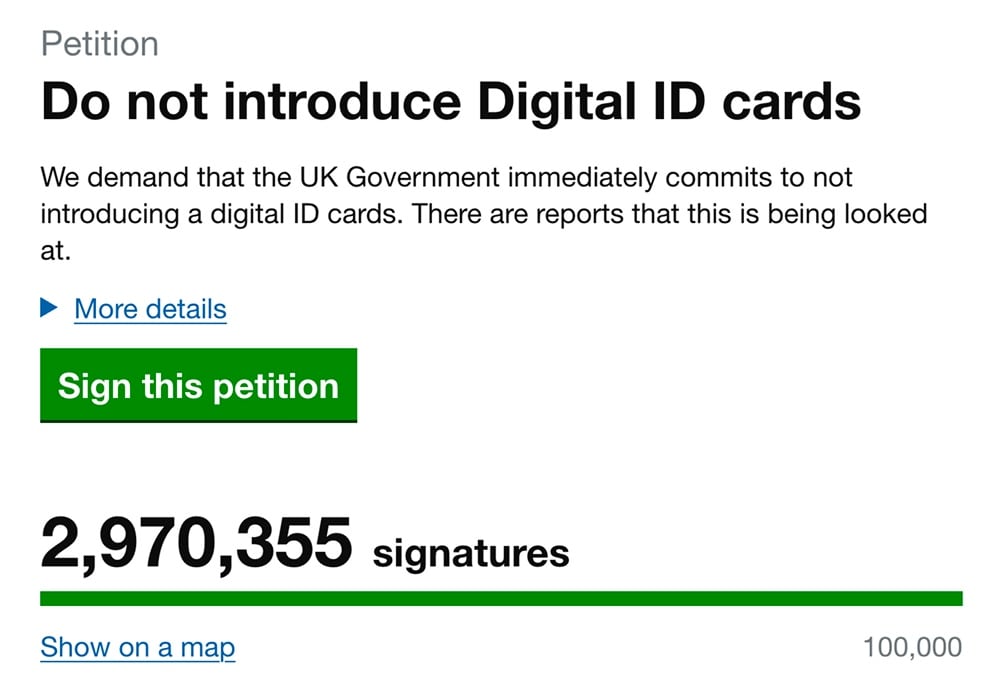
Public response to the UK’s digital ID plans is sharply divided. While some people welcome the convenience and would happily install a new digital ID app, a huge bloc is pushing back hard. The official 'Do not introduce digital ID cards' petition gathered almost 3 million signatures.
Future Outlook: The Rise of the "Credential Web" & What You Can Do
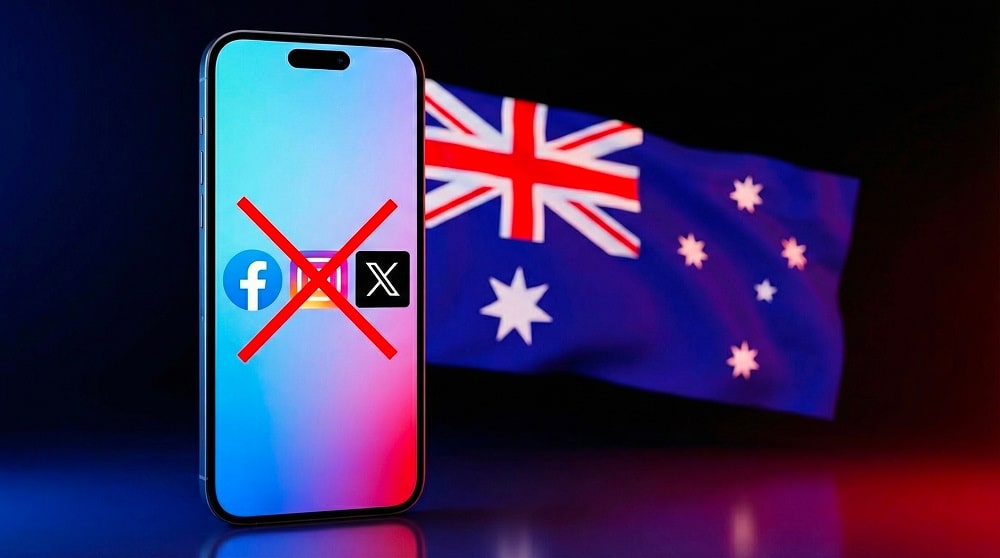
The UK digital ID is not a standalone initiative; it is part of a global "Credential Web". We are moving from an open internet to a gated digital society. Look at the signs: Australia is introducing legislation to ban social media for under-16s, regular platforms like ChatGPT and YouTube are demanding age verification, and new digital ID laws are making it harder to remain anonymous online.
That doesn’t automatically make the future dystopian, but it does shrink the places where you can move, talk and plan without attaching your full identity. The new “private islands” are services that deliberately don’t plug into every ID scheme, that minimise data, and that refuse to turn you into a product.
One of such services is Atomic Mail. We’re a secure, encrypted email provider that cares about your data, doesn’t demand personal data to sign up, and keeps your conversations out of the ad-tracking machinery.
🔐✳️ Sign up for free today, claim a private inbox that’s actually yours, protect your UK digital ID login, and give yourself at least one channel that stays yours even as the credential web expands.
FAQ: UK Digital ID
What is UK digital ID?
UK digital ID is a verified digital profile that proves who you are without showing paper documents each time. It uses signed digital credentials so services can trust your identity quickly and securely.
Is the UK Digital ID mandatory?
Technically, no. Practically, yes. You won't be arrested for not having one, but you might find it impossible to get a new job, rent a flat, open a bank account, or access some essential services without it.
Can the police demand to see my Digital ID?
Currently, no. But once the infrastructure is ubiquitous, legislation can change overnight to allow "digital stop and search."
What is GOV.UK One Login?
GOV.UK One Login is a centralized digital platform that replaces over 190 different government sign-in systems. It allows users to access all central government services using a single email address, password, and verified identity.
How does this affect my email security?
Significantly. Your email is the "recovery key" for your Digital ID. If a hacker breaches your standard Gmail/Outlook, they can reset your Digital ID, steal your identity, and lock you out of government services.
- The fix: Segregate your life. Use a secure, encrypted email service like Atomic Mail exclusively for your sensitive digital ID and banking links. Never mix it with your shopping or social media logins.
What if I don't have a smartphone or passport?
You can verify your identity at a Post Office branch. You create an account online, choose the "prove identity at a Post Office" option, and take your documents to a branch where staff will scan them for you. However, you still need an email address to create the account.
Is my data safe?
The government uses strong encryption and fraud checks. However, unlike the previous system (Verify), One Login is centralized, meaning GDS holds a directory of all users. Critics argue this creates a "honeypot" for hackers. The 2025 Data (Use and Access) Act also makes it easier for departments to share your data for fraud prevention.
Can I use a UK digital ID to buy alcohol?
Yes. From late 2025/2026 onwards, amendments to the Licensing Act 2003 will allow shops and pubs to accept certified digital IDs, such as Yoti or Post Office EasyID, as valid proof of age. This means you won't have to hand over your physical documents.